When Weeks Become Dollars: The Real Business Case for Faster Cabinet Delivery
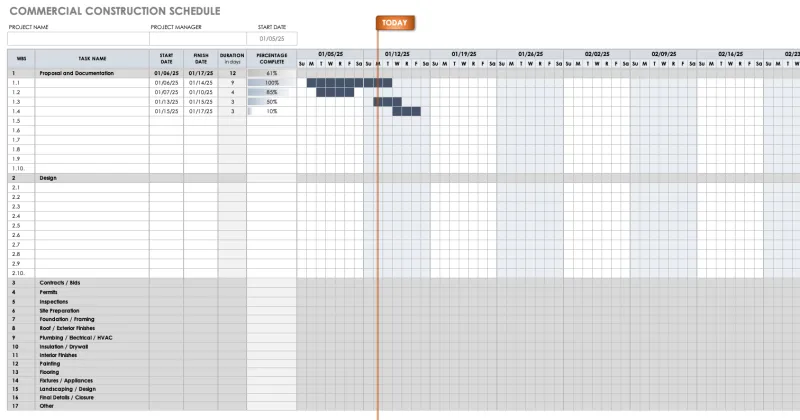
Photo: contractor construction timeline delivery truck cabinets commercial renovation project management, via www.smartsheet.com
The standard narrative around custom cabinetry has long been one of patient waiting. Lead times of eight, ten, or twelve weeks were treated as simply the price of doing business — an unavoidable consequence of quality craftsmanship. Clients planned around them. Contractors built buffer into their schedules. Project managers quietly absorbed the downstream costs when those windows slipped.
That model has not disappeared, but it is no longer the only option. And for a growing segment of the market, it is no longer an acceptable one.
At Fast Track Cabinets, rapid delivery is not a marketing phrase layered on top of a conventional manufacturing process. It is a structural commitment that shapes how we build, how we schedule, and how we serve clients whose projects cannot afford to stall. To understand why that matters, it helps to look at the specific situations where cabinet lead times stop being a scheduling inconvenience and start becoming a real financial liability.
The Contractor's Calculus: Bid Competitiveness and Project Throughput
For residential and commercial contractors, cabinet lead times function as a throttle on project velocity. A contractor who can confidently quote a four-week cabinet delivery window has a fundamentally different conversation with a prospective client than one who must build a twelve-week buffer into the schedule — and charge accordingly.
Consider a general contractor running three kitchen remodel projects simultaneously. Under a conventional cabinet timeline, each project may sit in a holding pattern for two to three months waiting on cabinetry before finish trades can proceed. That waiting period is not free. Subcontractors must be rescheduled. Dumpsters sit. Portable facilities accumulate daily rental charges. And the homeowner — increasingly aware that their project is stalled — begins asking questions that erode confidence in the contractor's management.
Now compress that timeline. When cabinet delivery arrives in three to four weeks rather than ten to twelve, the project keeps moving. Finish trades can be sequenced tightly. The contractor closes out the job faster, invoices sooner, and moves on to the next bid. Across a full year of operations, the throughput advantage of working with a fast-delivery cabinet supplier can translate directly into additional completed projects — and additional revenue — without adding a single crew member or piece of equipment.
For contractors in competitive markets, this is not an abstract benefit. It is a differentiator they can put in front of clients at the proposal stage.
Commercial Clients: Downtime Has a Price Tag, and It Is Rarely Small
In commercial construction and renovation, the financial stakes attached to cabinet lead times are even more explicit. A restaurant undergoing a back-of-house renovation cannot generate revenue while its kitchen is offline. A medical practice reconfiguring its exam room storage is scheduling around a disruption that affects patient throughput. A retail build-out that misses its targeted opening date faces lost sales, lease costs without corresponding income, and the reputational friction of a delayed launch.
In these environments, every week of additional lead time carries a dollar figure that project stakeholders can calculate with reasonable precision. A restaurant doing $15,000 in weekly revenue that stays closed an extra two weeks due to a cabinet delay has not merely experienced an inconvenience — it has absorbed a $30,000 revenue gap that no warranty or apology will recover.
The value proposition of fast cabinet delivery in commercial contexts is therefore not primarily about the cost of the cabinets themselves. It is about what those cabinets are enabling or blocking. When the critical path of a commercial project runs through a cabinet installation, the lead time on that cabinet order is effectively the lead time on reopening the business.
Fast Track Cabinets has worked with commercial clients across the restaurant, healthcare, and retail sectors who have structured their renovation timelines specifically around our delivery capabilities. The decision to prioritize speed in those cases was not sentimental — it was a straightforward financial calculation.
Homeowners and the Hidden Costs of Living Through a Renovation
The financial logic for contractors and commercial clients is relatively direct. For homeowners, the math is somewhat less visible but no less real.
A kitchen renovation that extends by four to six weeks due to cabinet delays may require the homeowner to eat out for that additional period — a cost that accumulates faster than most families anticipate. In more significant renovations where the home becomes temporarily uninhabitable, extended timelines translate directly into hotel stays, short-term rental costs, or the strain of living with family members. In high-cost metropolitan areas — think New York, San Francisco, Chicago, or Boston — even a few weeks of temporary housing can represent thousands of dollars in unplanned expense.
There is also the less quantifiable but very real cost of disruption. A kitchen that remains torn apart for three months rather than six weeks affects meal preparation, daily routines, family stress levels, and the general livability of the home. For homeowners who work remotely or have school-age children at home, that disruption is not a minor inconvenience — it is a sustained interference with daily life.
For these clients, the decision to invest in a faster-delivery cabinet solution is partly financial and partly about reclaiming normalcy on a reasonable timeline.
Knowing When Speed Deserves Priority — And When It Does Not
Not every project demands the fastest available turnaround, and it would be misleading to suggest otherwise. A homeowner planning a full gut renovation with a flexible six-month window may have the luxury of exploring every option on the market without timeline pressure. A commercial client in pre-development planning stages similarly has room to optimize for factors beyond speed.
But the threshold at which fast delivery becomes genuinely worth prioritizing is lower than most people assume. Here are the scenarios where we consistently see the investment in speed pay clear dividends:
- Projects with firm external deadlines — a lease start date, a business opening, a family event — where a missed cabinet delivery creates cascading consequences.
- Phased renovations where cabinet installation gates subsequent trades, and delays in one phase compress or eliminate the scheduling buffer for everything that follows.
- Contractors managing multiple active projects who need predictable, tight delivery windows to maintain project throughput and crew efficiency.
- Homeowners with temporary housing arrangements that carry daily or weekly costs, making every additional week of renovation meaningfully expensive.
- Commercial operators whose revenue generation is directly tied to the space being renovated.
In these situations, the premium — if any — associated with a faster delivery partner is not simply a convenience fee. It is an investment with a calculable return.
The Structural Difference That Makes Speed Possible
Rapid delivery does not happen by accident or by simply working faster. It requires a manufacturing and fulfillment infrastructure specifically engineered for compressed timelines — efficient production sequencing, responsive customer communication, and a logistics capability that treats on-time delivery as a non-negotiable standard rather than an aspirational target.
Fast Track Cabinets was built around exactly that model. Our clients — whether residential homeowners, general contractors, or commercial developers — choose us because they need custom cabinetry that meets their specifications and arrives when their project requires it. Not when the calendar eventually permits.
In a market where time has always been money, the ability to compress cabinet lead times without compromising quality is not a minor operational detail. It is a competitive advantage that belongs to the clients we serve.