Spend Where It Counts: A Room-by-Room Strategy for Prioritizing Custom Cabinet Upgrades
Renovation budgets are finite. Ambitions rarely are. The gap between the two is where most projects either succeed with discipline or stumble under the weight of too many competing priorities. When it comes to custom cabinetry, the question is not simply which rooms need better storage — it is which rooms will reward that investment most generously, and in what order.
Approaching cabinet upgrades as a sequenced strategy rather than a sweeping overhaul changes the entire financial and practical calculus. Done correctly, each phase of the project funds the next through improved efficiency, enhanced property value, and a measurable improvement in daily life.
Establishing the Framework: Three Lenses for Prioritization
Before committing to any room, evaluate each space through three distinct lenses.
Usage frequency refers to how often a room is actively engaged throughout the day. High-traffic spaces absorb the benefits of improved cabinetry immediately and consistently.
Return on investment reflects how strongly a given upgrade influences property value. Some rooms carry far more weight in the eyes of appraisers and prospective buyers than others.
Quality-of-life impact measures the degree to which better storage reduces friction in your daily routine. A well-organized space does not merely look better — it functions better, and that difference compounds over time.
Weigh each candidate room against all three criteria. The rooms that score highest across the board should lead your sequencing plan.
The Kitchen: The Undisputed Starting Point
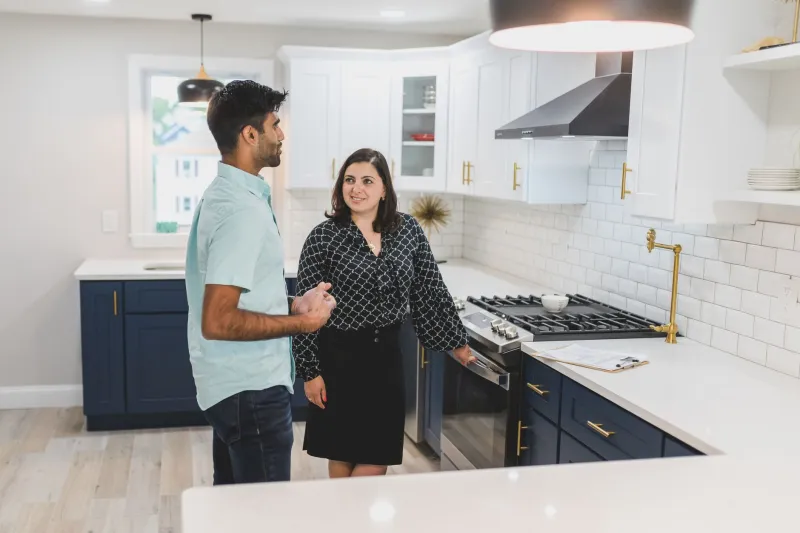
For the vast majority of homeowners, the kitchen earns the top position without serious debate. It is the most frequently used room in the house, the most scrutinized during a real estate transaction, and the space where storage deficiencies cause the most daily frustration.
Custom kitchen cabinetry consistently ranks among the highest-return renovations in residential real estate. According to industry data, a well-executed kitchen upgrade — anchored by quality cabinetry — can recoup a substantial portion of its cost at resale, particularly in competitive markets.
Beyond financial return, the kitchen is where the dysfunction of inadequate storage is felt most acutely. Overcrowded countertops, inaccessible corner cabinets, and a chronic shortage of drawer space are not minor inconveniences. They are daily inefficiencies that erode the functionality of one of the most important rooms in the home.
If budget permits only a single cabinet project, the kitchen should receive it.
Bathrooms: High Impact in a Compact Footprint
Once the kitchen is addressed, primary bathrooms present a compelling second priority. The logic mirrors that of the kitchen: bathrooms are used multiple times daily, they carry meaningful weight in home valuations, and they suffer visibly when storage is inadequate.
The primary bathroom — particularly the master bath in larger homes — is where custom vanity cabinetry and built-in storage solutions can transform a cluttered, utilitarian space into something that functions with genuine elegance. Deep drawers, custom-fitted organizational inserts, and carefully proportioned vanity cabinets can eliminate the countertop chaos that plagues so many bathrooms.
For homeowners with multiple bathrooms, focus first on the one used most frequently. Secondary bathrooms can follow in a later phase without sacrificing the immediate gains from the primary upgrade.
The Home Office: A Modern Priority That Has Earned Its Place
The rise of remote and hybrid work has fundamentally altered how Americans use their homes. A dedicated workspace is no longer a luxury amenity — for millions of households, it is a professional necessity.
Custom cabinetry in a home office addresses a specific and pressing problem: the collision of professional demands with residential space constraints. Built-in shelving, file storage, equipment housing, and concealed cable management all contribute to an environment that supports focused, sustained work.
The home office ranks third in this framework because its daily usage frequency has increased dramatically, and because the quality-of-life impact of a well-organized workspace extends beyond comfort into professional performance. For households where one or more occupants work from home regularly, this upgrade may rival the bathroom in urgency.
Utility and Laundry Spaces: The Overlooked Multipliers
Utility rooms, mudrooms, and laundry spaces rarely generate excitement in renovation planning conversations. That oversight is a strategic mistake.
These are transitional spaces — rooms that mediate between the outside world and the interior of the home. When they lack adequate storage, the disorder radiates outward. Coats pile on furniture, cleaning supplies occupy prime kitchen real estate, and laundry accumulates on surfaces that were never intended for it.
Custom cabinetry in a mudroom or laundry room delivers disproportionate organizational returns relative to its cost. Because these spaces tend to be compact, the investment required is typically lower than a full kitchen project, yet the reduction in household friction can be immediate and significant.
For families with children, pets, or active outdoor lifestyles, a well-cabinetted mudroom may represent the single highest quality-of-life return per dollar spent.
Commercial Spaces: A Parallel Hierarchy
For business owners, the prioritization framework operates on the same principles but through a commercial lens.
Client-facing spaces — reception areas, showrooms, conference rooms — warrant early attention because they directly influence first impressions and brand perception. A disorganized or poorly outfitted client space communicates something about the business that no marketing effort can fully counteract.
Back-of-house operations — storage rooms, break rooms, filing areas — follow based on how directly they affect employee efficiency and workflow. In industries where materials, supplies, or records must be rapidly accessible, inadequate storage is a measurable drag on productivity.
The sequencing logic is consistent: invest first where the return — whether financial, operational, or reputational — is greatest.
Phasing the Vision Without Losing Sight of It
A phased approach to custom cabinetry is not a compromise. It is a disciplined method for maximizing the impact of every dollar committed to the project.
The key is to plan the entire vision before executing any single phase. Knowing where you intend to go allows each completed room to inform the next — in aesthetic continuity, hardware consistency, and material choices. A kitchen completed today should anticipate the bathroom vanity planned for next year.
At Fast Track Cabinets, we work with clients at both the planning and execution stages to ensure that phased projects retain coherence from start to finish. Our ability to deliver custom cabinetry on accelerated timelines means that the gap between phases can be measured in weeks rather than months — keeping momentum alive and renovation fatigue at bay.
The Strategic Imperative
Renovation decisions made without a sequencing strategy tend to produce uneven results: one beautifully appointed room surrounded by spaces that highlight what has not yet been addressed. A deliberate hierarchy, grounded in usage frequency, ROI potential, and daily quality-of-life impact, transforms a series of individual projects into a coherent, cumulative investment.
Start where the return is highest. Build from there. And approach every phase with the same clarity of purpose that defined the first.