What Your Cabinets Are Hiding: A Homeowner's Guide to Catching Structural Problems Early
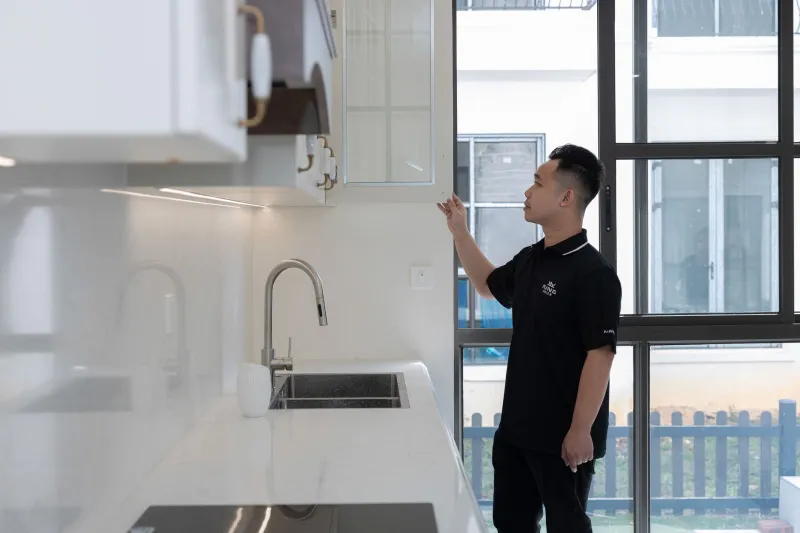
Cabinets rarely fail dramatically. There is no single morning when a homeowner walks into the kitchen and finds everything in ruin. Instead, the deterioration is quiet and incremental — a drawer that catches slightly, a door that no longer closes flush, a faint discoloration along the bottom of a base cabinet. These signals are easy to dismiss, and most homeowners do exactly that.
The consequence of that dismissal tends to be financial. What begins as a warped shelf or a compromised hinge mounting point can progress, over months or years, into structural failure that requires full cabinet replacement rather than targeted repair. Preventive inspection changes that equation entirely. Knowing what to look for — and where — gives property owners the ability to intervene early, when solutions are still inexpensive and straightforward.
This guide is designed to help homeowners and property managers conduct a methodical evaluation of their existing cabinetry. No specialized tools are required. What is required is attention, patience, and a willingness to look in the places most people never think to examine.
Start With the Frame, Not the Face
The most common mistake homeowners make when evaluating cabinets is focusing on surfaces. Finish quality, door style, and hardware appearance are visible, so they naturally draw the eye. But the structural integrity of a cabinet is determined by what happens behind and beneath those surfaces.
Begin every inspection by examining the cabinet box itself — the sides, back panel, floor, and top rail. In framed construction, press gently against the face frame where it meets the cabinet side. Any give or separation indicates that the glue joint or fasteners have failed, which compromises the entire unit's rigidity. In frameless construction, check that the side panels remain perfectly plumb and that no bowing has occurred along their length.
Pay particular attention to the cabinet floor, especially in base units positioned beneath sinks or near dishwashers. This is where moisture damage most commonly originates. Press the panel firmly with your palm. A solid cabinet floor will feel rigid and unyielding. Softness, sponginess, or any audible creak under pressure indicates that moisture has penetrated the substrate — typically particleboard — and begun to compromise its structural integrity. Left unaddressed, this condition will worsen with every subsequent exposure to humidity or minor leaks.
Examine the Hinge Points and Mounting Hardware
Hinges and their mounting points are among the most mechanically stressed components in any cabinet system. Every time a door opens and closes, force is transferred into the hinge screws and the material surrounding them. Over time, particularly in cabinets constructed with thin or low-density substrate, those screw holes begin to strip or enlarge.
Open each door fully and observe whether it swings smoothly and returns to a consistent closed position. A door that drifts open on its own, or one that requires pressure to stay shut, typically signals hinge misalignment or a stripped mounting hole rather than a hardware defect. Remove the door if possible and examine the hinge cup cavity. Any cracking in the surrounding material, or visible gaps between the hinge plate and cabinet surface, confirms that the mounting integrity has been compromised.
The same scrutiny applies to drawer slides. Pull each drawer out to its full extension and observe whether it travels straight or deflects to either side. A drawer that wobbles laterally or drops at the front when extended indicates worn slide mechanisms or, more seriously, that the drawer box itself has begun to rack — a condition where the box loses its square geometry under repeated stress.
Look for the Signatures of Moisture and Age
Water is the single greatest threat to cabinet longevity, and it rarely announces itself. Chronic low-level moisture exposure — from steam, condensation, slow plumbing leaks, or inadequate ventilation — leaves a pattern of evidence that a trained eye can identify before structural failure occurs.
Along the interior walls of base cabinets, look for any staining, discoloration, or white mineral deposits that suggest water has traveled across the surface. Check the toe kick panel where it meets the floor; separation or warping at this junction often indicates that the base of the cabinet has absorbed moisture from the floor itself. Inside upper cabinets positioned adjacent to exterior walls, feel for any coldness or dampness that might suggest inadequate insulation or a slow wall leak behind the cabinet.
Finish degradation also carries information. Bubbling, peeling, or delaminating veneer on door faces or cabinet sides is not merely cosmetic — it signals that the adhesive bond between the finish layer and the substrate has been weakened, often by moisture or temperature fluctuation. Once delamination begins, it accelerates. A door that is bubbling today will be structurally compromised within a relatively short period if the underlying moisture source is not addressed.
Assess the Shelving and Interior Structure
Fixed and adjustable shelves deserve careful evaluation, particularly in pantry cabinets and tall storage units where significant weight is routinely placed on individual panels. A shelf that has developed a visible sag — even a modest one — has already exceeded its load capacity at some point and may have experienced internal fracturing of the substrate.
For adjustable shelves, examine the shelf pin holes along the cabinet sides. Elongated or torn holes indicate that the shelf has shifted under load, which means either the pins are undersized for the application or the cabinet side material is insufficiently dense to hold them securely. This is a common failure point in lower-quality cabinet construction and one that is easily overlooked during a casual inspection.
While examining the interior, check that the cabinet back panel remains fully attached at all four edges. In many production cabinets, the back is secured with staples alone. Over time — particularly if the cabinet has been moved, adjusted, or subjected to racking stress — those staples can pull free, leaving the back panel loose. A detached back panel eliminates one of the primary elements that keeps the cabinet box square, and the unit will progressively deteriorate from that point forward.
When Inspection Reveals a Replacement Threshold
Not every finding from a thorough cabinet inspection will point toward replacement. Many issues — stripped hinge screws, worn drawer slides, loose hinges, minor finish damage — are entirely repairable at modest cost. The purpose of a systematic evaluation is not to generate alarm but to establish an accurate picture of where each cabinet stands on its service life continuum.
The findings that typically indicate replacement rather than repair include: substrate damage from moisture that has spread beyond a localized area, face frame separation that has compromised the structural geometry of the box, and multiple concurrent failures across a cabinet run that suggest systemic quality limitations in the original construction.
When replacement becomes the appropriate path, that determination is far more valuable when made proactively — before a cabinet fails in a way that damages adjacent surfaces, flooring, or plumbing — than reactively. The cabinet that is replaced on a planned timeline costs considerably less, in total, than the one that fails unexpectedly and takes surrounding materials with it.
At Fast Track Cabinets, we work with homeowners and property managers who have completed exactly this kind of evaluation and arrived at a clear-eyed understanding of what their spaces require. A thorough inspection is not the end of the process — it is the most productive possible beginning.