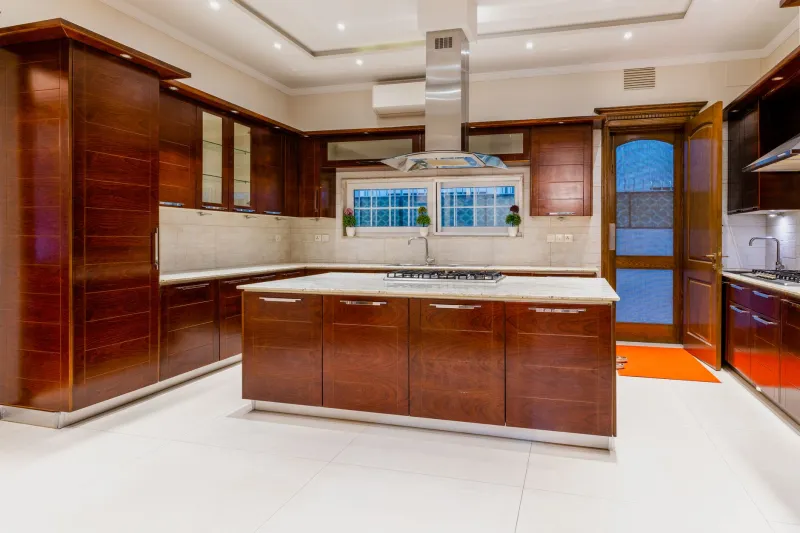
Measure Twice, Order Once: How Precise Cabinet Specifications Keep Contractor Projects on Time and on Budget
In residential and commercial construction, few line items carry as much downstream risk as cabinetry. Cabinets arrive late, arrive wrong, or arrive in configurations that no longer match a jobsite that has evolved since the original order was placed. Each of these scenarios translates directly into lost hours, strained client relationships, and margin erosion that no contractor budgets for willingly.
The solution is neither complicated nor expensive. It is, however, disciplined. Contractors who invest serious time in cabinet specification before submitting an order consistently outperform those who treat the process as a formality. The financial and operational case for getting specifications right the first time is not theoretical — it is measurable, repeatable, and available to any contractor willing to change how they approach the pre-order phase.
The Real Cost of Getting It Wrong
A cabinet order that requires even a single mid-project revision carries costs that extend well beyond the price of a replacement door or an additional filler strip. Consider what actually happens when a specification error surfaces during installation.
The installation crew stops working or pivots to unrelated tasks while the issue is resolved. The general contractor fields calls from a client who expected a finished kitchen by a specific date. A reorder is placed, often at expedited shipping rates that were never included in the original bid. If structural modifications are required — a wall repositioned, a soffit adjusted, a countertop edge reworked — the cost multiplies further. On a project where the cabinet line represented $18,000 of a $60,000 kitchen renovation, a single specification error can consume several hundred dollars in labor and materials before the replacement component even arrives.
Multiply that scenario across three or four projects in a single quarter, and the aggregate impact on annual profitability becomes difficult to ignore.
What a Thorough Cabinet Specification Actually Includes
Many contractors conflate a cabinet specification with a cabinet list. The two are not the same. A cabinet list identifies which units are needed. A cabinet specification describes, in precise and verifiable detail, exactly how those units must be built, finished, and configured to function correctly in a specific space.
A complete specification should address the following elements without ambiguity:
Dimensional accuracy. Width, height, and depth measurements must account for finished wall conditions, not framed rough openings. Walls that appear plumb and square during framing frequently reveal variance once drywall is applied. Specifications that rely on framing dimensions alone are inherently optimistic.
Run sequencing and adjacency. Cabinets do not exist in isolation. The relationship between upper and lower runs, corner units, appliance panels, and transition fillers must be mapped before ordering. A specification that accounts for each adjacency eliminates the filler gaps and misaligned reveals that require field improvisation during installation.
Door and drawer configuration. Hinge orientation, overlay style, and drawer slide weight ratings are not aesthetic choices — they are functional requirements that must be matched to the space and its intended use. A specification that leaves these details unresolved invites substitutions that may not perform as expected.
Finish and material consistency. When a project involves multiple cabinet runs across different rooms or phases, finish consistency across orders requires explicit documentation. Color, sheen level, and wood species should be confirmed in writing against physical samples, not recalled from memory.
Mechanical and utility clearances. Plumbing rough-ins, electrical outlet locations, and HVAC registers must be reconciled against the cabinet layout before ordering. Discovering a conflict at the point of installation is invariably more expensive than identifying it during the specification phase.
The Site Walk That Changes Everything
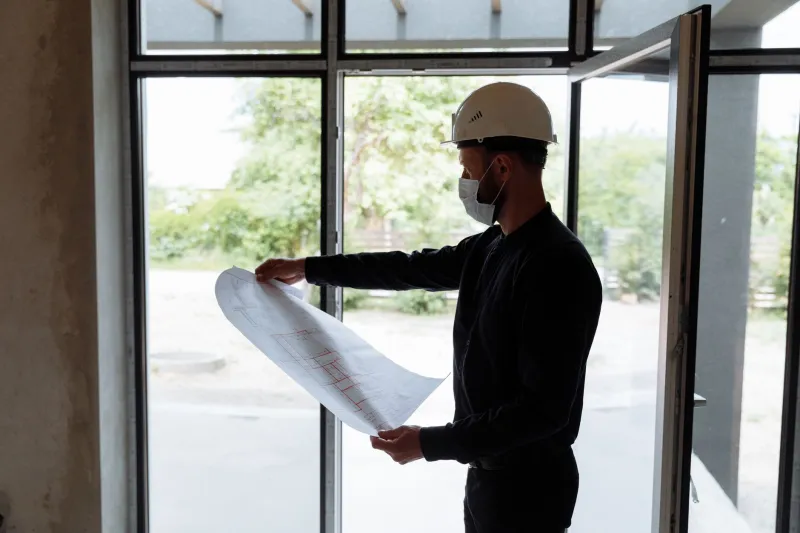
The most reliable way to build a complete cabinet specification is to conduct a structured site evaluation after rough mechanical work is complete and before the order deadline arrives. This is not a casual walkthrough. It is a documented audit that produces a written record of every condition relevant to the cabinet installation.
Contractors who approach this evaluation systematically — measuring each wall independently, photographing existing conditions, noting any anomalies in ceiling height or floor levelness — generate specifications that survive contact with the actual jobsite. Those who rely on architectural drawings alone, without field verification, are trusting documents that were produced before the building existed in its current form.
The site walk also creates an opportunity to identify conditions that could affect delivery logistics: stairwell dimensions, doorway clearances, elevator access in multi-story commercial projects. A cabinet order that is dimensionally perfect for the installation space but physically impossible to move through the building's access points introduces a problem that no amount of specification accuracy can resolve after the fact.
Why Fast Turnaround Amplifies the Value of Early Specification Work
The operational benefits of thorough specification work are compounded significantly when the cabinet supplier is capable of delivering finished product on an accelerated timeline. When a contractor locks down specifications early and partners with a manufacturer that can move quickly from confirmed order to delivered product, the project schedule gains meaningful flexibility.
Consider the alternative dynamic: a contractor who orders early from a supplier with an eight-to-twelve-week lead time has very little room to absorb a specification error. Any revision triggers a reorder cycle that can push the installation date by weeks, disrupting downstream trades and potentially triggering penalty clauses in the construction contract.
With a supplier capable of faster turnaround, the window between order confirmation and delivery is compressed. This creates a practical buffer — not for careless specification work, but for the minor field adjustments that even the most thorough pre-order evaluation occasionally misses. A dimension that needs a modest revision, a finish that needs to be confirmed against a freshly painted wall — these manageable refinements can be addressed without catastrophic schedule consequences when the supply chain moves with appropriate speed.
Building Specification Discipline Into Standard Practice
For contractors who manage multiple simultaneous projects, the challenge is not understanding the value of thorough specification work — it is institutionalizing the practice so that it occurs consistently regardless of project size or crew familiarity with the jobsite.
This means developing a standard pre-order checklist that every project manager completes before a cabinet order is submitted. It means establishing a policy that no order is placed from architectural drawings alone without field verification. It means assigning clear accountability for the specification document so that no ambiguity exists about who is responsible for confirming each detail.
Contractors who build these habits into their standard operating procedures do not simply avoid costly errors on individual projects. They build a reputation for predictability and professionalism that clients notice and that referral networks reward.
The Specification Is the Project
A cabinet project does not begin when the installation crew arrives on site. It begins when the specification document is completed with enough precision and completeness to leave no material question unanswered. Every hour invested in that document before the order is placed returns multiples in avoided rework, protected margins, and on-schedule completions.
The contractors who understand this principle — and who pair disciplined specification work with a cabinet supplier capable of delivering on an accelerated schedule — are not simply managing risk. They are building a structural advantage that compounds across every project they take on.