The Door Is the Cabinet: Why Construction Method Determines Whether Your Investment Lasts Five Years or Fifty
When homeowners and commercial clients begin the cabinet selection process, the conversation almost always gravitates toward finish colors, hardware styles, and box construction. These are legitimate considerations. But experienced contractors and seasoned renovators will confirm what the industry has long understood: the door is where a cabinet's long-term performance is either secured or compromised. It is the most frequently handled component, the most visually prominent surface, and—critically—the element most exposed to the environmental forces that degrade cabinetry over time.
Choosing between construction methods is not an aesthetic decision. It is an engineering decision with consequences that play out over years and decades.
Why the Door Deserves More Scrutiny Than It Typically Receives
In most renovation discussions, cabinet doors are treated as a finish detail—a visual wrapper around the functional box. This perspective understates their structural role considerably. A door that warps, cracks, or delaminates does not merely look poor. It compromises the seal of the cabinet, places stress on hinge points, and signals to anyone in the room that the entire installation is failing. In residential kitchens, that impression affects daily experience. In commercial environments—restaurants, medical offices, retail spaces—it affects client perception and, ultimately, brand credibility.
The two dominant construction approaches—frame-and-panel and solid-slab—respond to environmental conditions in fundamentally different ways. Understanding those differences is essential before committing to any cabinet specification.
Frame-and-Panel Construction: Engineered for Movement
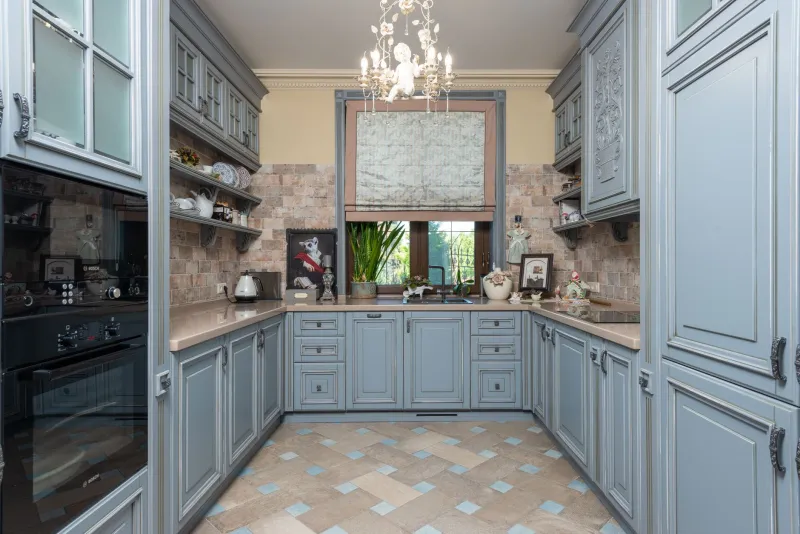
The frame-and-panel door is one of the oldest furniture-making solutions in Western craft tradition, and its longevity as a design standard is not accidental. The construction consists of a rigid outer frame—typically composed of stiles (vertical members) and rails (horizontal members)—surrounding a floating center panel. That panel is intentionally not glued into the frame. It is allowed to move.
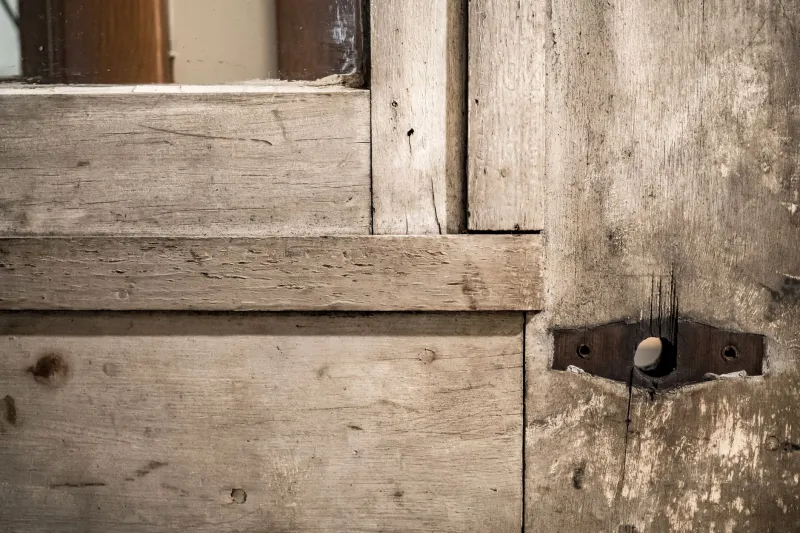
This is the key engineering insight. Wood is a hygroscopic material. It absorbs and releases moisture in response to ambient humidity, expanding and contracting across its grain as conditions shift. In the United States, where homes and commercial buildings can experience significant seasonal humidity swings—particularly in regions like the Southeast, the Midwest, and the Pacific Northwest—this movement is not a rare occurrence. It is a certainty.
By allowing the center panel to float within the frame, frame-and-panel construction accommodates that movement without transferring stress to the glue joints or the surface finish. The frame maintains its shape. The panel moves independently. The door remains flat, functional, and visually intact across years of environmental cycling.
For clients in climates with pronounced seasonal variation, or for installations in kitchens and bathrooms where steam and temperature fluctuation are routine, this construction method provides a structural advantage that no finish treatment or hardware upgrade can replicate.
Solid-Slab Construction: Precision Demands the Right Material
The solid-slab door—sometimes called a flat-panel or full-overlay door in contemporary design contexts—presents a different engineering profile. In its purest form, a slab door is a single, uninterrupted panel spanning the full door face. Its appeal is aesthetic and practical: it offers a clean, minimal surface that suits modern and transitional design vocabularies and is straightforward to clean and maintain.
However, the structural behavior of a slab door depends almost entirely on the material from which it is manufactured. A slab door milled from a single piece of solid lumber carries the same moisture-response characteristics as any other wood product—meaning it is susceptible to warping, cupping, and cracking if the material is not properly dried, sealed, and maintained. This is why solid-wood slabs, while visually striking, are rarely the preferred specification for high-humidity or high-traffic environments.
The more common and structurally sound approach to slab door manufacturing uses medium-density fiberboard (MDF) or high-quality plywood as the substrate, often with a veneer or thermofoil surface applied over it. MDF, in particular, has a dimensional stability that solid wood cannot match—it does not have a grain direction, and therefore does not expand or contract preferentially along any axis. For painted finishes, MDF slab doors are frequently the superior specification choice precisely because they resist the telegraphing of wood grain and remain dimensionally stable in controlled interior environments.
The operative phrase is controlled environments. Slab doors in any material require consistent temperature and humidity management to perform at their best over time. In spaces where those conditions cannot be guaranteed, frame-and-panel construction retains a meaningful advantage.
Where Rapid Manufacturing and Structural Integrity Intersect
One of the persistent misconceptions in the cabinet industry is that speed and quality exist in opposition—that accelerating the manufacturing timeline necessarily degrades the structural outcome. At Fast Track Cabinets, our production process is designed to disprove that premise directly.
Rapid delivery does not require shortcuts in door construction. What it requires is process discipline: precise material sourcing, controlled drying and staging environments, and manufacturing sequences that do not compress the steps that matter most to long-term performance. Whether we are producing frame-and-panel doors for a traditional kitchen renovation in the Mid-Atlantic or MDF slab doors for a contemporary commercial buildout in the Southwest, the construction standards do not change because the timeline is compressed.
This is a distinction worth understanding before any specification conversation. A manufacturer that achieves speed by reducing material quality or skipping critical curing stages is not delivering fast cabinets—they are delivering future problems on an accelerated schedule.
The Finish Question: Secondary to Construction, Not Irrelevant
It would be misleading to suggest that finish selection is inconsequential. The topcoat applied to any door affects its resistance to moisture infiltration, its cleanability, and its long-term appearance. A catalyzed conversion varnish or a UV-cured finish will outperform a standard brushed lacquer in high-use environments. A properly applied thermofoil on a quality MDF substrate will maintain its appearance for years under normal residential conditions.
But finish is a secondary layer of protection, not a substitute for sound construction beneath it. A poorly constructed frame-and-panel door with an exceptional finish will still warp. A well-constructed MDF slab with a modest finish in a climate-controlled environment will remain stable for decades. The hierarchy matters: construction method first, material selection second, finish specification third.
Making the Right Specification for Your Project
For residential clients undertaking kitchen or bath renovations, the primary question is environmental. If the space experiences significant humidity variation—or if the home lacks climate control in certain seasons—frame-and-panel construction in a quality hardwood or engineered wood is the more defensible long-term choice. If the aesthetic priority is a clean, contemporary surface in a well-regulated interior, an MDF slab door with an appropriate finish is a legitimate and durable specification.
For commercial clients, the calculus shifts toward durability under use rather than aesthetic preference alone. High-cycle door operation, exposure to cleaning chemicals, and the reputational cost of visible deterioration all argue for construction methods that prioritize structural resilience.
In either context, the door construction decision deserves the same deliberate attention typically reserved for box material and hardware selection. It is not a detail. It is the specification that determines whether your cabinet investment performs for five years or fifty.
At Fast Track Cabinets, that distinction is built into every project we deliver—regardless of how quickly it needs to arrive.