The True Price of 'Affordable': Why Stock Cabinets Often Cost More Than You Think
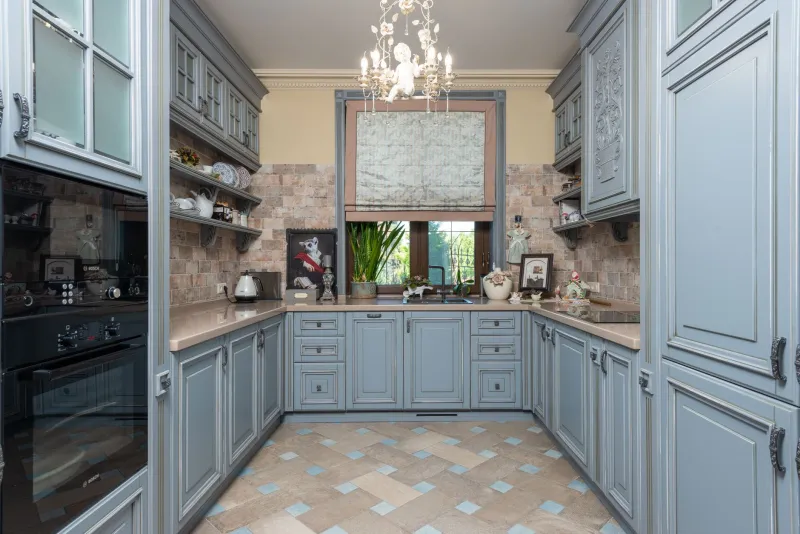
There is a particular kind of optimism that accompanies a trip to a big-box home improvement store. The cabinets are right there, fully assembled, modestly priced, and available for immediate pickup. For a homeowner working within a tight renovation budget, the appeal is understandable. What is less visible — and rarely discussed at the point of sale — is the fuller financial picture that emerges over months and years of actual use.
Budget comparisons between stock and custom cabinets are almost universally misleading, because they compare only what is easy to quantify: the upfront purchase price. The costs that accumulate afterward — modifications, workarounds, replacements, and lost functionality — rarely appear in that initial spreadsheet. For anyone making a serious cabinet investment, those downstream costs deserve equal scrutiny.
What 'Stock' Actually Means for Your Space
Stock cabinets are manufactured in fixed increments — typically in two-inch width intervals — and designed to fit the broadest possible range of kitchens, bathrooms, and utility spaces. That standardization is precisely what keeps their price low. It is also what makes them a poor fit for most real-world spaces.
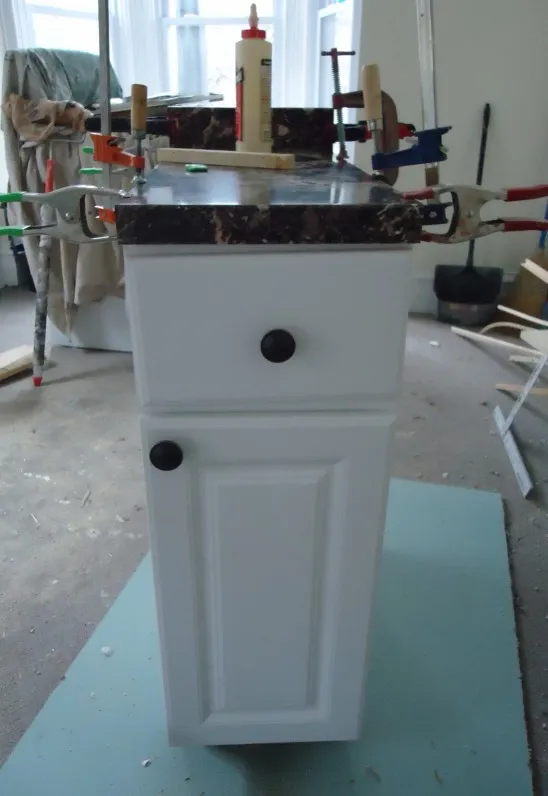
The average American kitchen is not built around two-inch increments. Walls are rarely perfectly square. Ceiling heights vary. Appliance dimensions have evolved. When stock cabinets meet an actual room, the result is almost always a series of compromises: filler strips to close gaps, reduced-depth units that leave awkward recesses, or cabinet runs that simply do not extend to the ceiling — leaving dead space that collects dust and contributes nothing to storage capacity.
Those filler strips and trim pieces are not free. Neither is the labor required to install them convincingly. A homeowner who budgets for the cabinet price alone often discovers that the finishing work adds hundreds — sometimes thousands — of dollars to the final invoice.
The Modification Premium
Stock cabinets are designed to be sold, not tailored. When a homeowner's space requires something outside the standard configuration — a corner solution, a pull-out drawer bank, an integrated appliance garage, or a cabinet that accommodates an unusual plumbing run — the options narrow quickly.
Some modifications can be made in the field by a skilled installer, but field modifications carry their own costs. Custom drilling, cutting, or shimming takes time, and time is billed by the hour. More significantly, field modifications compromise structural integrity in ways that factory-engineered solutions do not. A cabinet that has been cut down or altered on-site is not the same cabinet it was when it left the warehouse.
In many cases, homeowners purchasing stock cabinets end up paying a contractor for modification labor that approaches or exceeds the cost differential between stock and custom in the first place — without receiving the precision or durability that a purpose-built cabinet provides.
Durability and the Replacement Cycle
Stock cabinets are manufactured to a price point. That is not an insult; it is a business reality. To achieve the margins that make high-volume retail viable, manufacturers make choices about materials, joinery, and hardware that prioritize cost efficiency over longevity.
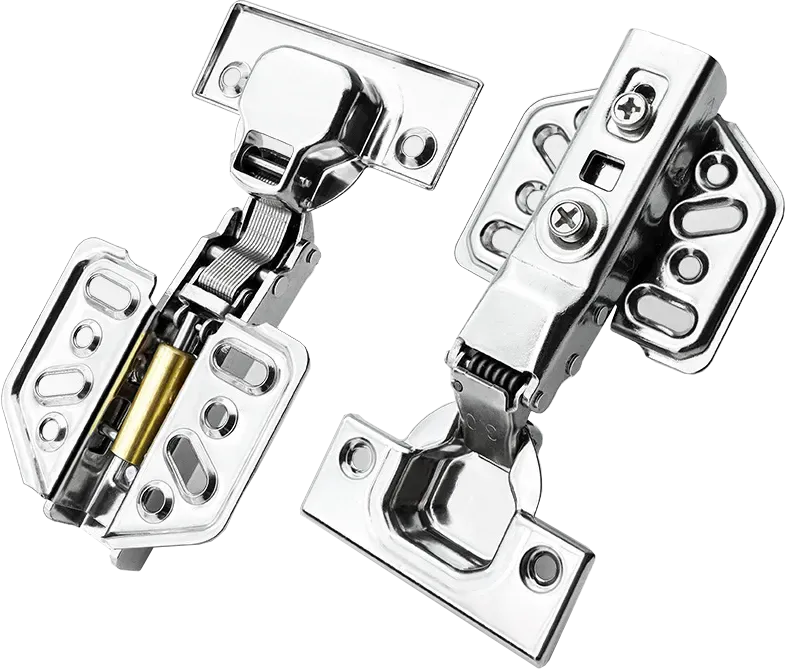
The consequences of those choices compound over time. Cabinet boxes constructed from lower-grade particleboard absorb moisture and begin to swell or delaminate within a few years in high-humidity environments like kitchens and bathrooms. Drawer slides rated for lighter loads wear out under daily use. Door hinges lose their alignment. Finishes fade or chip more readily than their higher-grade counterparts.
A custom cabinet built with furniture-grade plywood, dovetail or dowel joinery, and commercial-quality hardware does not follow the same degradation timeline. The initial investment is higher, but the replacement cycle is substantially longer — often by a decade or more. When the cost of a second or third stock cabinet purchase is factored into a 20-year comparison, the economics shift considerably.
The Functionality Gap
Storage efficiency is not simply a matter of having enough cabinets. It is a matter of having the right cabinets in the right configuration for the way a space is actually used. Stock cabinets, by definition, cannot account for individual household habits, specific collections of cookware, or the particular workflow of a professional kitchen.
Custom cabinetry begins with a conversation about how a space functions before a single dimension is drawn. Pull-out shelving, integrated spice racks, deep drawer configurations for pots and pans, and dedicated zones for small appliances are not afterthoughts — they are engineered into the design from the outset. The result is a cabinet system that actively supports daily routines rather than simply providing a place to put things.
The value of that functionality is real, even if it is difficult to express as a line item. Homes with well-designed storage systems are easier to maintain, more pleasant to use, and — critically — more attractive to prospective buyers. Real estate professionals consistently note that kitchen cabinetry is among the first features buyers evaluate, and the difference between a stock installation and a custom one is apparent to anyone who opens a drawer or examines a corner solution.
The Delivery Equation
One argument frequently made in favor of stock cabinets is availability. If the units are sitting in a warehouse, the project can begin immediately. Custom cabinets, the assumption goes, require a lengthy lead time that disrupts renovation schedules.
That assumption is increasingly outdated. Modern cabinet manufacturers have invested in production workflows that dramatically compress lead times without sacrificing the precision that custom work demands. At Fast Track Cabinets, the delivery model is built around the understanding that speed and quality are not mutually exclusive. Clients should not have to choose between a cabinet that fits their space correctly and a cabinet that arrives on a timeline that keeps their project moving.
When custom delivery timelines are competitive with stock availability, the last significant argument for off-the-shelf cabinets — immediacy — loses much of its force.
Making an Honest Comparison
The most useful budget comparison between stock and custom cabinets is not a side-by-side of purchase prices. It is a total cost of ownership calculation that accounts for installation finishing, modification labor, hardware upgrades, replacement likelihood, and the functional value of a properly fitted space.
For many homeowners and commercial clients, that calculation produces a result that is far less favorable to stock cabinets than the showroom floor suggests. The apparent savings dissolve under scrutiny, replaced by a clearer picture of what a purpose-built cabinet investment actually delivers: a space that works correctly from day one, holds its quality over time, and does not require revisiting in five years.
Bargain shopping has its place. Cabinetry — a structural and functional element that defines how a room operates for decades — is rarely the right place for it.